Blog
Summer: the rain sensor changes things when a fixed timer is no longer enough.
20 July 2026
In the heat of summer, the irrigation system keeps running and the only way to optimise water usage is to have a reliable rain sensor capable of detecting changes in weather conditions.
A fixed timer has a major drawback: it keeps running according to the schedule set months ago, regardless of what is actually happening. Two innovative tools that allow the irrigation system to react to changing conditions such as strong wind, sudden rain, or downpours are the rain sensor and weather features. Here is how Rain’s versions work and when to recommend them.
Rain sensor: intervention during an event
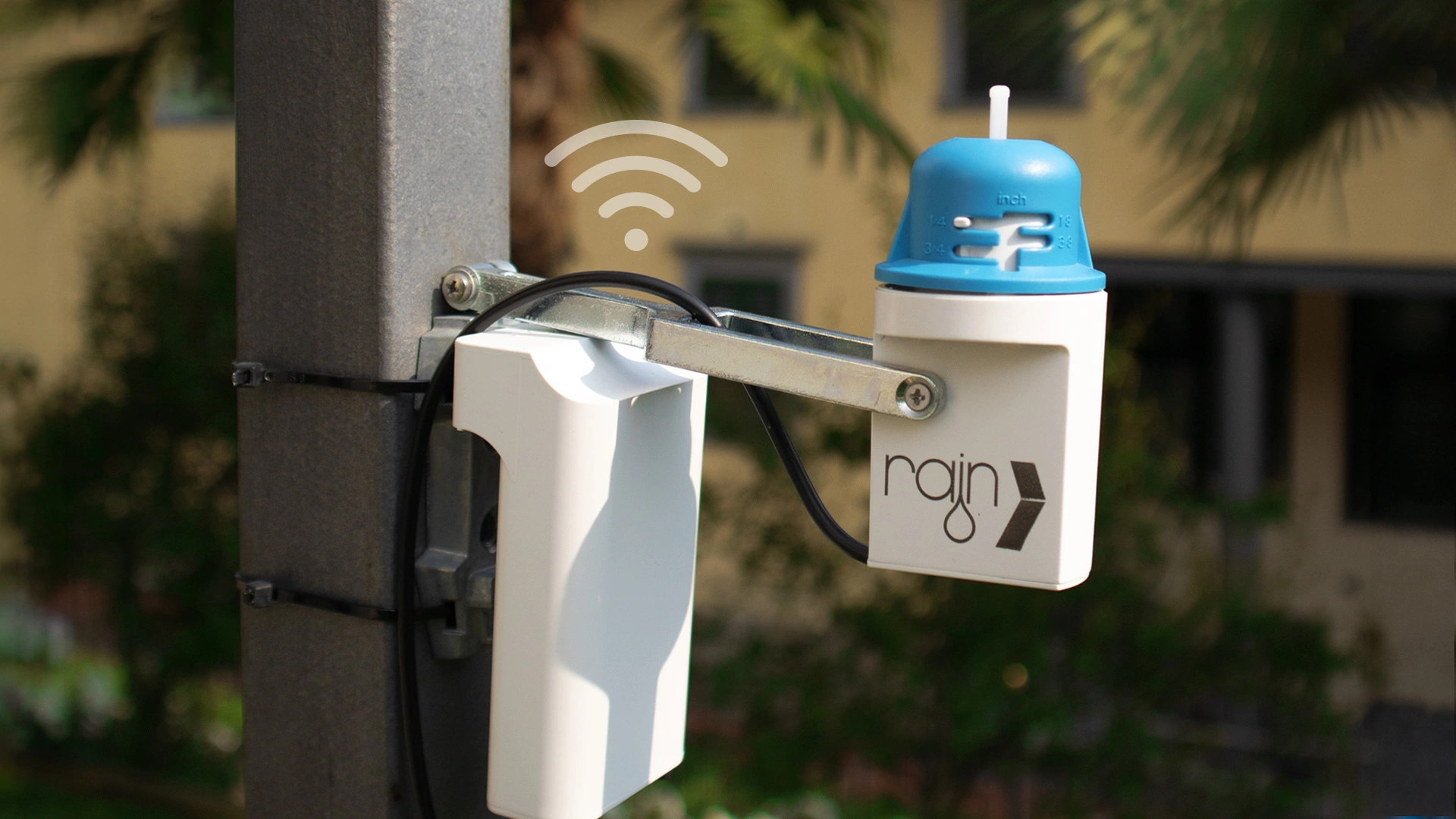
The wireless lithium-battery sensor Acqua Vision interrupts irrigation during or after a rain event, communicating with other Vision devices via Bluetooth 5.0.
Key points to keep in mind on site:
- Adjustable threshold: the precipitation threshold can be set to 3, 6, 9, or 18 mm — use the lower threshold for draining soils or sensitive areas, the higher threshold where greater tolerance is required before stopping.
- Zone-by-zone intervention: on the Pure Vision BLD controller, the Sens Start feature allows the rain sensor’s intervention to be programmed by individual zone. Useful when an irrigation system serves both exposed areas and areas under a pergola or canopy that should not stop.
- Seasonal maintenance: the recommended recharging frequency is once a year. A quick check at the start of the irrigation season prevents the sensor from arriving flat during the most critical months.
- Where not to install it: it must be positioned away from the trajectory of the sprinklers (to avoid confusing spray with rain) and never under canopies, covered terraces, or garages, otherwise it will not detect actual rainfall.
Weather data: anticipating the decision
The sensor reacts to an event already in progress. To anticipate the decision, the irrigation system needs to be connected to weather data via a Nuvola Vision (WiFi or Cell). Vision irrigation systems connected to the internet can use the weather forecast service, which prevents irrigation if rain is predicted. This is not simply reading a bulletin: the algorithm cross-references the probability and quantity of rain, temperature, and wind with the configured schedule, deciding whether to cancel or maintain irrigation. The connection to the OpenWeather forecast service is active on all Nuvola Vision devices.
When to recommend one, the other, or both
- Rain sensor only: irrigation system without a stable internet connection on site, limited client budget, priority on reactive stopping during an active rain event.
- Sensor and Nuvola (weather features): client already inclined towards remote management, irrigation system with multiple zones to optimise, aim to reduce manual interventions during the season.
- Recommended combination: the two tools cover different moments — the Nuvola device blocks the scheduled irrigation when rain is forecast, while the sensor intervenes if rain arrives regardless, even when the forecast does not prove exactly accurate.
Quick site checklist
What the installer can do before recommending a rain sensor paired with a weather device:
- Check rain sensor compatibility with the installed controller
- Set the precipitation threshold according to the soil type
- On Pure Vision BLD, assess Sens Start by zone if there are covered areas
- Check the sensor charge at the start of the season and, if necessary, charge it
- Verify the installation position (away from sprinklers and coverings)
- If the client already has a Nuvola device, verify that the service is activated
A real case study, supported by data.
A rain sensor and weather features are not two alternative options, but two levels of the same approach: one intervenes when rain arrives, the other anticipates it. Together, they make it possible to propose an irrigation system that adapts to real summer conditions, rather than following a fixed schedule throughout the season.
To help you with the assessment and, above all, to support your proposal to the client, we have prepared a REAL CASE STUDY showing just how much difference choosing an irrigation system with a rain sensor actually makes.
Discover, with data in hand, the actual water saving, the optimisation of irrigation, and above all the economic benefit for the client.
Discover the latest innovations
in irrigation systems!