Blog
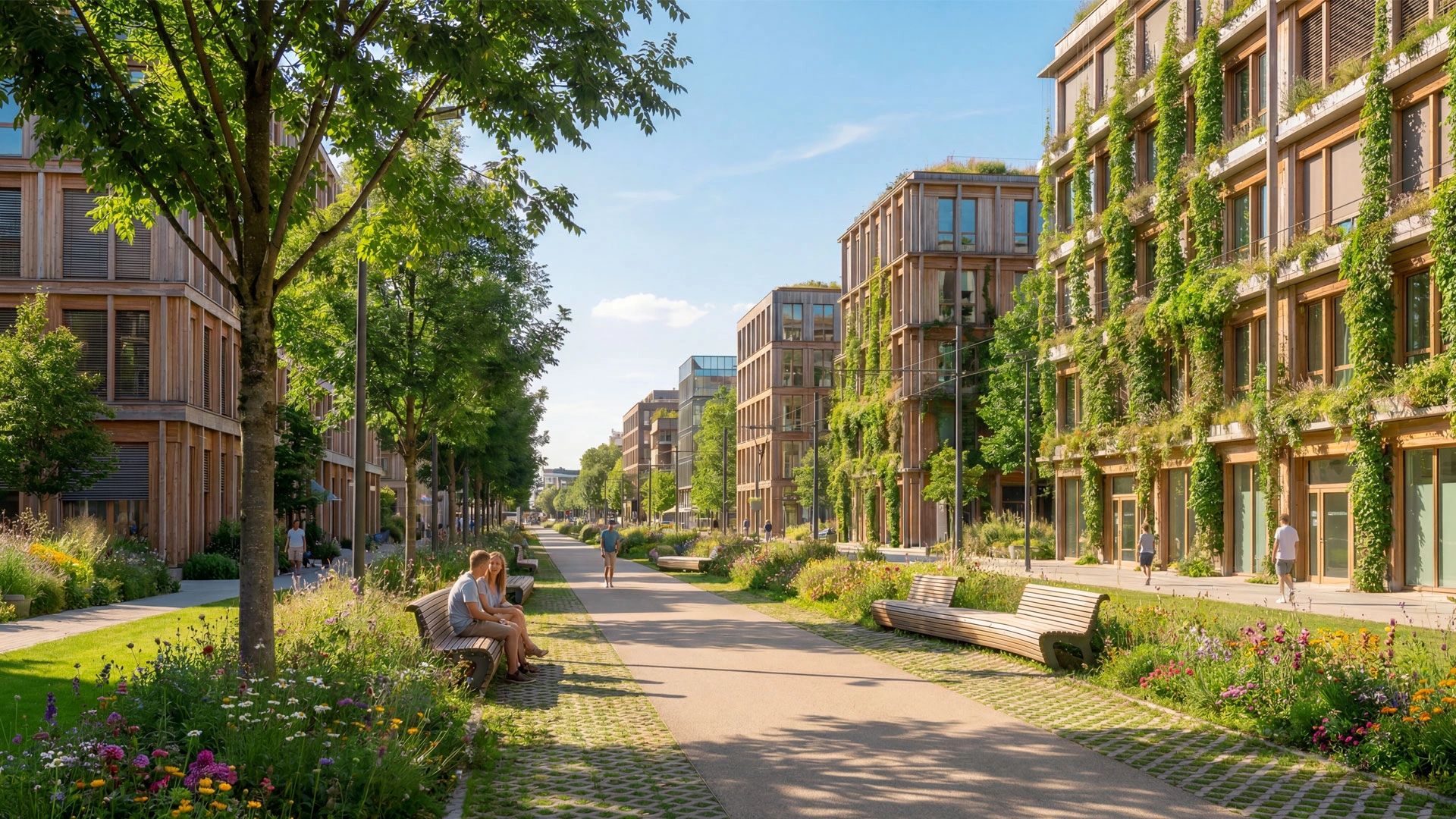
Urban Green Spaces: the Urban Strategy Against Heat Islands
29 June 2026
Italian cities are becoming increasingly hot. Asphalt, concrete and impermeable surfaces absorb heat during the day and release it in the evening, raising urban temperatures by several degrees compared to peripheral areas. This is the phenomenon of the urban heat island, now at the centre of urban green space design.
According to a CNR study, all Italian regional capital cities show clear heat island effects, with thermal differences that can exceed 6–8°C between city centres and peripheral areas during heatwaves. Urban green spaces therefore play an increasingly important role in managing urban thermal comfort.
Evapotranspiration: the Natural Cooling of Cities
Trees, lawns and vegetated surfaces lower temperatures through evapotranspiration: water absorbed from the soil is released into the air as vapour, drawing heat away from the surrounding environment.
Well-irrigated urban parks and green surfaces can lower air temperature by up to 2–4°C compared to fully mineralised areas. At surface level, the difference between a vegetated lawn and asphalt can exceed 10°C during the hottest hours of the day.
For this reason, the quality of irrigation management becomes decisive. Urban green spaces under water stress rapidly lose their cooling capacity.
Urban Green Spaces and Smart Irrigation
Contemporary urban green space design increasingly focuses on guided evapotranspiration, which allows vegetation to continue cooling the environment even during the hottest periods.
When the soil loses moisture, the ability of plants to release water vapour into the atmosphere decreases, and the surface temperature of lawns and tree rows rises rapidly.
Rain sensors, smart controllers and scheduled irrigation allow the water supply to be modulated according to temperature, solar radiation and soil moisture, helping urban green spaces maintain more stable temperatures on the hottest days.
Urban Misting: Beyond Simple Urban Green Spaces
Alongside vegetation, the use of strategic misting systems in squares, outdoor dining areas and pedestrian zones is growing. Water micronisation creates a perceptible reduction in temperature without wetting surfaces or people.
Integrated with urban green spaces, these systems improve the thermal comfort of public areas during heatwaves. In some urban installations, high-pressure misting can reduce the perceived temperature by up to 5–6°C in the most sun-exposed pedestrian areas.
Designing Cooler Cities Through Irrigation
Today, urban green spaces serve an increasingly important function: reducing city overheating, improving the comfort of public spaces, and making urban areas more liveable during summer.
For landscape designers and maintenance professionals, urban green spaces now require management that is increasingly attentive to the city’s climatic conditions. From irrigation design to strategic misting, every choice contributes to creating cooler, more liveable and more efficient urban spaces during the hottest months.
Discover the latest innovations
in irrigation systems!