Blog
From corrective maintenance to more efficient maintenance: the role of Rain’s new solenoid opening system in irrigation
25 May 2026
In professional irrigation systems, the speed with which an anomaly is identified can make the difference between a straightforward maintenance intervention and a problem capable of generating water waste, inefficiencies and system downtime.
Maintenance is now evolving towards increasingly prevention-oriented approaches: rather than waiting for the problem to become apparent, the focus is on organising periodic checks with inspections and interventions to identify any critical issues at an early stage.
In this context, the evolution of mechanical components can also have a tangible impact on day-to-day maintenance activities.
Efficient maintenance is not just “corrective” or scheduled.
Maintenance is still largely conceived according to two main approaches:
- Corrective maintenance, which responds to the problem once it becomes apparent: it is generally reactive and serves to contain a situation of damage and waste.
- Scheduled maintenance: involves ongoing checks that do not wait for a failure, but still entail costs in terms of the professional’s time and the optimisation of the appropriate inspection frequency.
Together, these two approaches are still not sufficient: maintenance efficiency does not depend solely on the frequency of inspections or the organisation of interventions, but also on how well components are designed to facilitate verification, access and replacement of parts. This is a fundamental factor that directly affects maintenance costs and one that an irrigation professional must not overlook when designing a system.
Faster diagnostics thanks to new solenoid opening systems
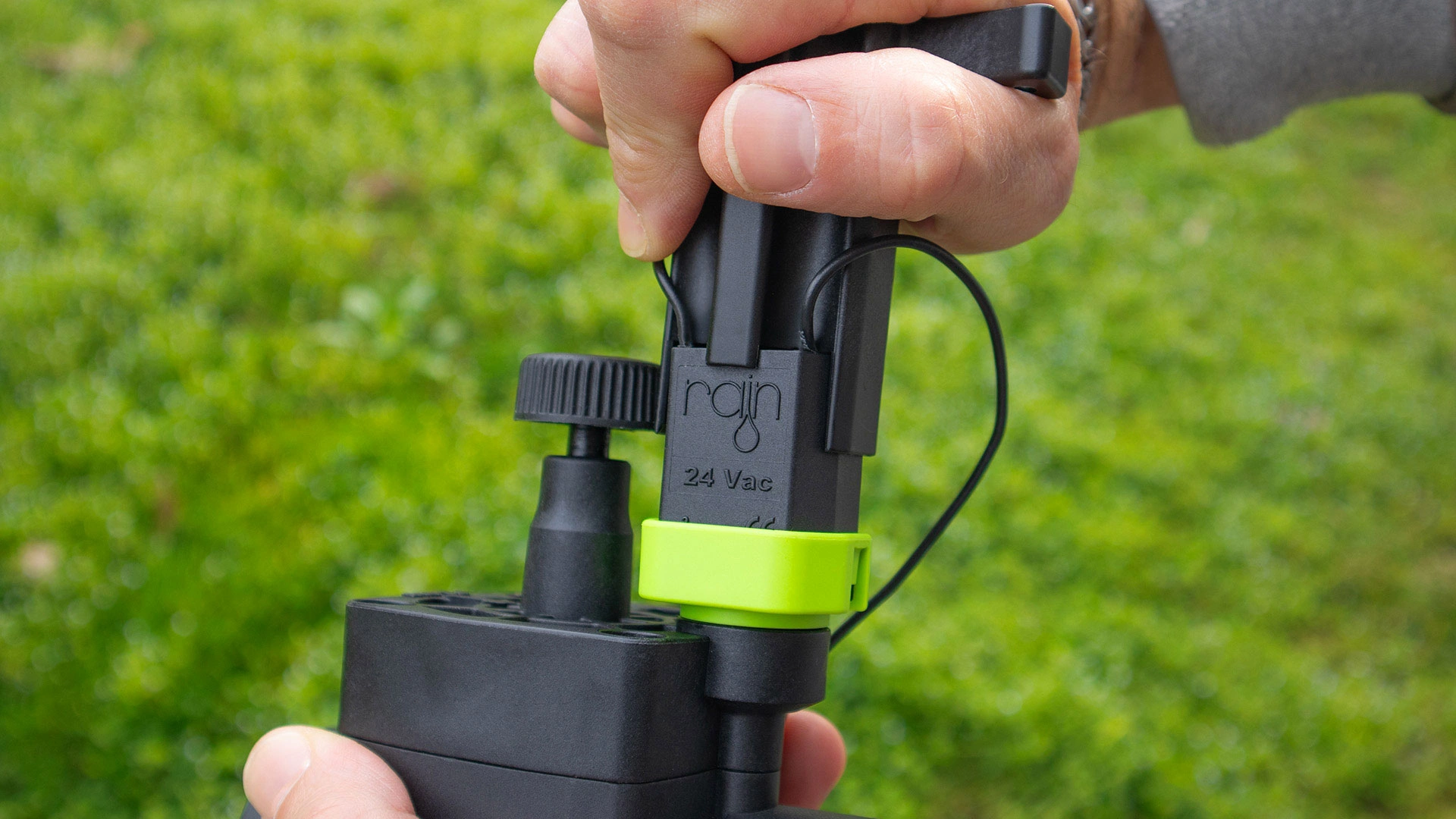
The new Rain solution for easier solenoid opening is designed to simplify the inspection and maintenance operations of solenoid valves.
Without altering the operation of the system, this mechanical development makes access to components more practical and field operations faster, even in hard-to-reach valve boxes.
For technicians, this means being able to identify any anomalies more quickly, reduce errors during replacements and interventions, and cut operational time and maintenance complexity. In practice, this translates into greater intervention effectiveness.
Technology, therefore, supports more efficient, faster and better-organised maintenance.
Tangible ROI: lower costs, less waste
Adopting a more efficient approach to irrigation maintenance is both a technical and an economic decision.
Reducing the man-hours devoted to inspections, avoiding unnecessary replacements and quickly identifying malfunctioning valves means cutting operating costs.
At the same time, water waste caused by undetected leaks is reduced, improving the overall efficiency of the system.
Towards more reliable irrigation
Maintenance is becoming a key element in improving the long-term management of a system.
For designers and maintenance professionals, this means more legible and scalable systems, with clearer intervention priorities. In short: irrigation that evolves alongside those who manage it.
Would you like to improve the maintenance of your systems? Discover RAIN solutions and take control to the next level.
Discover the latest innovations
in irrigation systems!